
What Is Digital Marketing Automation?
Digital marketing automation uses AI to turn raw customer data into personalized, automated action across every channel. Because manual campaigns can’t keep pace with modern buyers, more agencies now treat digital marketing automation as a core strategy rather than a nice-to-have extra. In fact, enterprise case studies increasingly show these systems running in live production, not just pilot tests. As a result, businesses of every size are asking the same question: what does digital marketing automation actually involve, and where should a team start?
Instant Personalization and Decision Making
Case studies show how AI systems turn data into action across channels. AI agents for small business covers what this looks like in practice.
What Digital Marketing Involves
Digital marketing used to be a set of separate tasks. SEO, ads, and email often worked on their own. Today, the best teams build systems. They use digital marketing solutions powered by data, creative work, and AI automation. The goal is not to automate every task. It is to automate repeat work that can be measured, so people can spend more time on strategy, positioning, and story. That gives customers faster and more useful experiences at every step.
Why Digital Marketing + AI Automation Is the New Baseline
AI changes how campaigns are planned, run, and improved. We break down what that looks like for a small team in our guide to AI automation for small businesses. The real value comes when AI works with the basics. Without clean tracking, clear messages, and a simple funnel, digital marketing automation can only help you fail faster.
A modern growth stack should help you:
- Understand audiences by behavior, intent, and stage
- Send the right message at scale
- Guide people through a multi-channel journey
- Measure with strong analytics and source tracking
- Save time without losing brand voice
This is where marketing automation tools and AI helpers are most useful, especially for small teams with big goals.
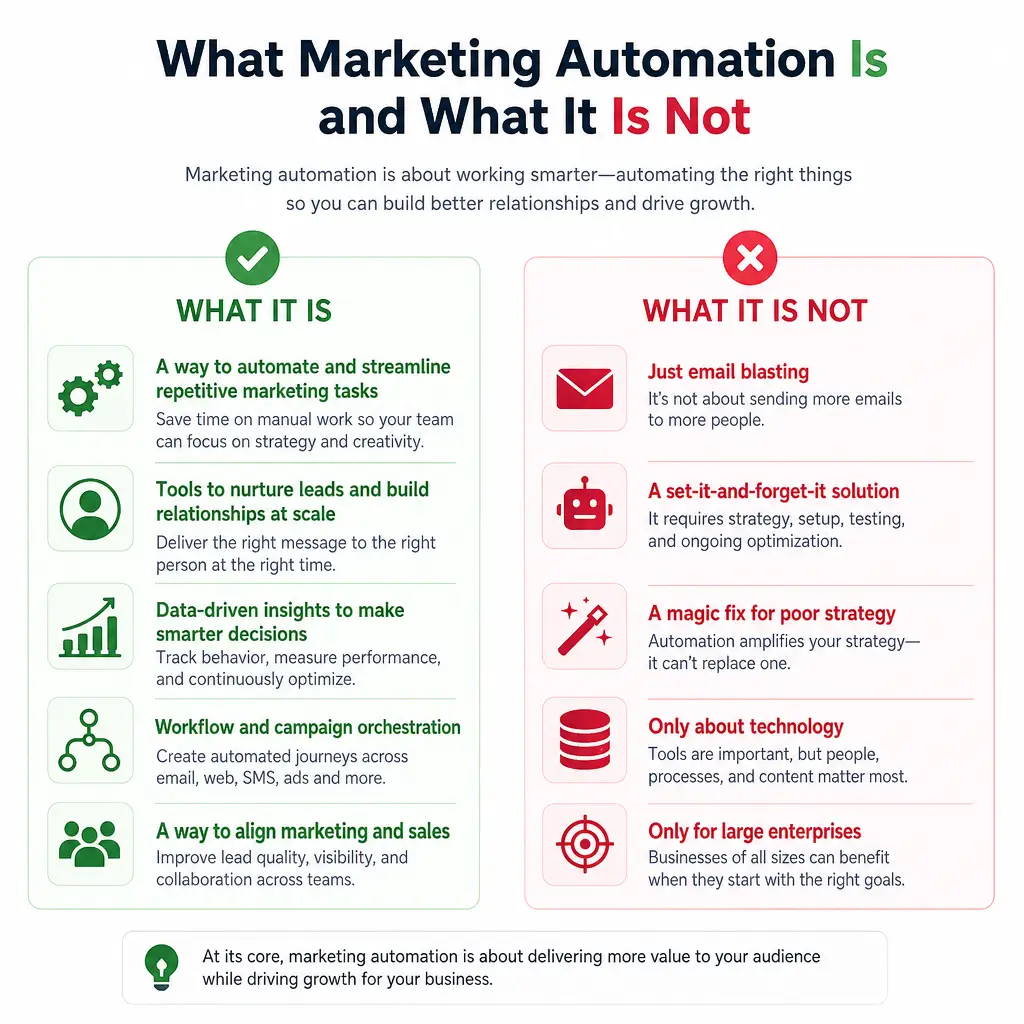
What Marketing Automation Is and What It Is Not
If you ask what marketing automation is, think of rules, data, and channels working together to move people through a journey.
Marketing automation is:
- Triggered messages, like welcome emails or cart recovery
- Segmentation and life-cycle routing
- Lead scoring and sales handoff
- Reporting and testing workflows
Marketing automation is not:
- Spam sent on autopilot
- A replacement for strategy, creative, or customer research
- A promise of sales without a good offer and user experience
AI adds more value with better timing, content variants, and faster analysis, but it still needs structure.
The Core Parts of Strong Digital Marketing Solutions
Think of your system like a machine. If one part is missing, performance drops.
1) Positioning and offer
Before any channel, answer these brand positioning questions:
- Who is it for
- What problem do you solve
- Why are you different
- What should they do next
2) Content and creative engine
This is the fuel for SEO, social, email, and ads. Our guide to building a content strategy that attracts your ideal customers walks through the process.
3) Funnel and life-cycle
You need a mapped journey, not guesses.
4) Channel mix and coordination
This is where an omnichannel mindset matters. People move between search, social, email, and ads.
5) Measurement
Without trust in measurement, you cannot scale with confidence, especially across paid channels. This is usually where strategic consulting earns its keep.
Omnichannel Marketing: A Simple Strategy Guide
An omnichannel plan does not mean being everywhere. It means your brand stays consistent while fitting each channel. That is the idea behind search everywhere optimization.
A simple framework:
- One source of truth: customer data in your CRM and analytics
- Channel roles:
- SEO captures intent
- Paid social creates demand and retargets
- Google Ads captures high-intent searches
- Email converts and keeps customers
- Content builds trust and lowers CAC over time
- Consistent messaging: one promise, many formats
How AI helps:
- Finds channel mixes that often lead to conversions
- Creates creative variants from one core message
- Spots drop-offs between steps, like ad to landing page to form
How to Build a Funnel AI Can Improve
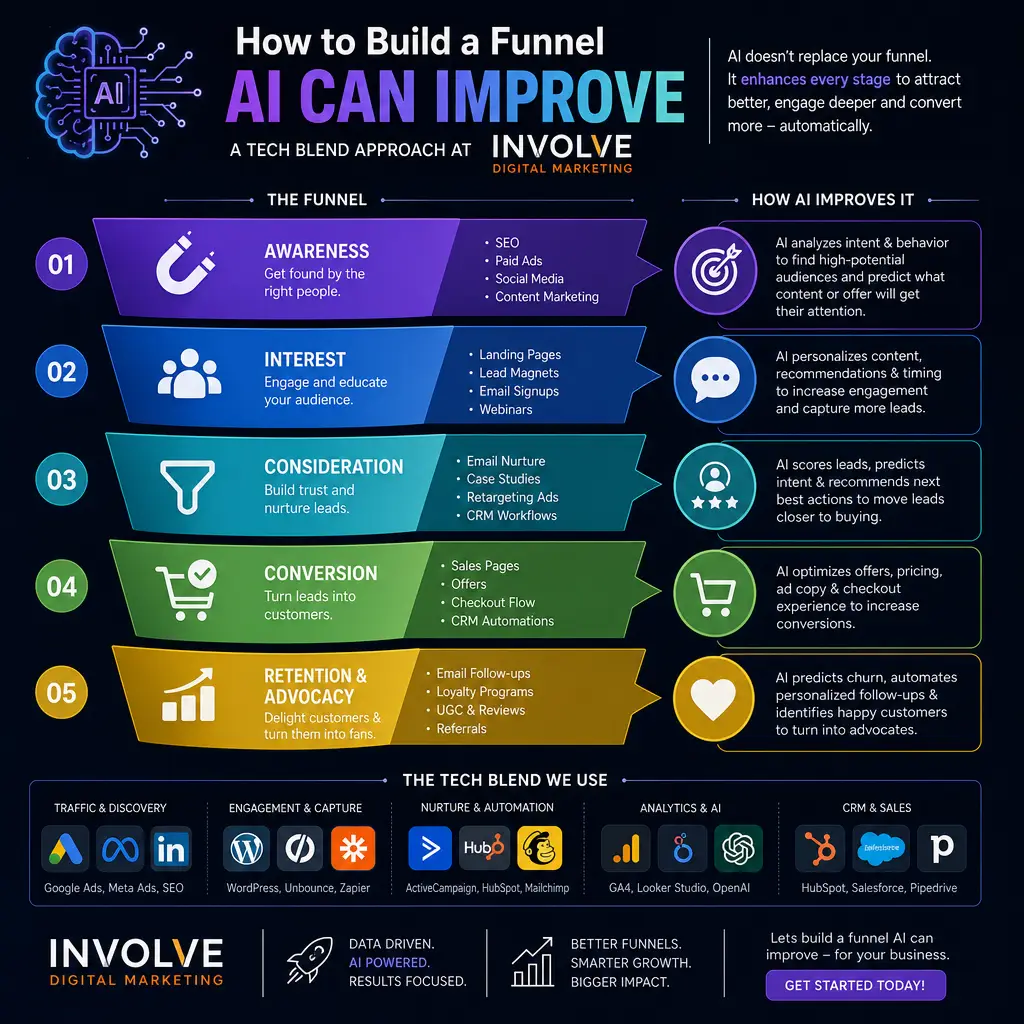
If you want to build a marketing funnel, start with clarity. The funnel should match real customer choices, not your org chart.
Funnel stages
1) Awareness
- Content, social, video, PR, and top-of-funnel ads
- Goal: attention and relevance
2) Consideration
- Lead magnets, webinars, case studies, and comparison pages
- Goal: trust and proof
3) Conversion
- Demos, trials, pricing pages, product pages, and consult calls
- Goal: cut friction and make the next step clear
4) Retention and expansion
- Onboarding, life-cycle email, communities, and customer marketing
- Goal: reduce churn and grow LTV
Where automation fits:
- Trigger sequences from behavior, like visits or downloads
- Lead scoring to guide sales follow-up
- Dynamic content by segment and stage
AI speeds up:
- Landing page drafts
- Drop-off analysis
- Nurture paths based on intent
SEO and Content: Build a Plan That Compounds
A strong SEO and content marketing plan still drives some of the best long-term growth. Google’s guidance on creating helpful, reliable, people-first content is the clearest standard to write against.
What to publish
- Problem pages: how to fix a clear pain point
- Comparison pages: alternatives and X vs Y pages
- Use-case pages: built for industries and roles
- Case studies: proof and detail
- Hub pages: topic clusters with internal links
AI can help you:
- Build outlines from search intent
- Refresh old posts with new angles
- Draft schema, FAQs, and meta descriptions
- Spot content gaps versus competitors
But keep humans in charge of:
- Brand view and original insight
- Real examples, screenshots, and customer stories
- Final copy check. Google’s guidance on using generative AI content and our own notes on when AI content helps or hurts rankings are worth reading here
Social Media Ads That Do Not Waste Budget
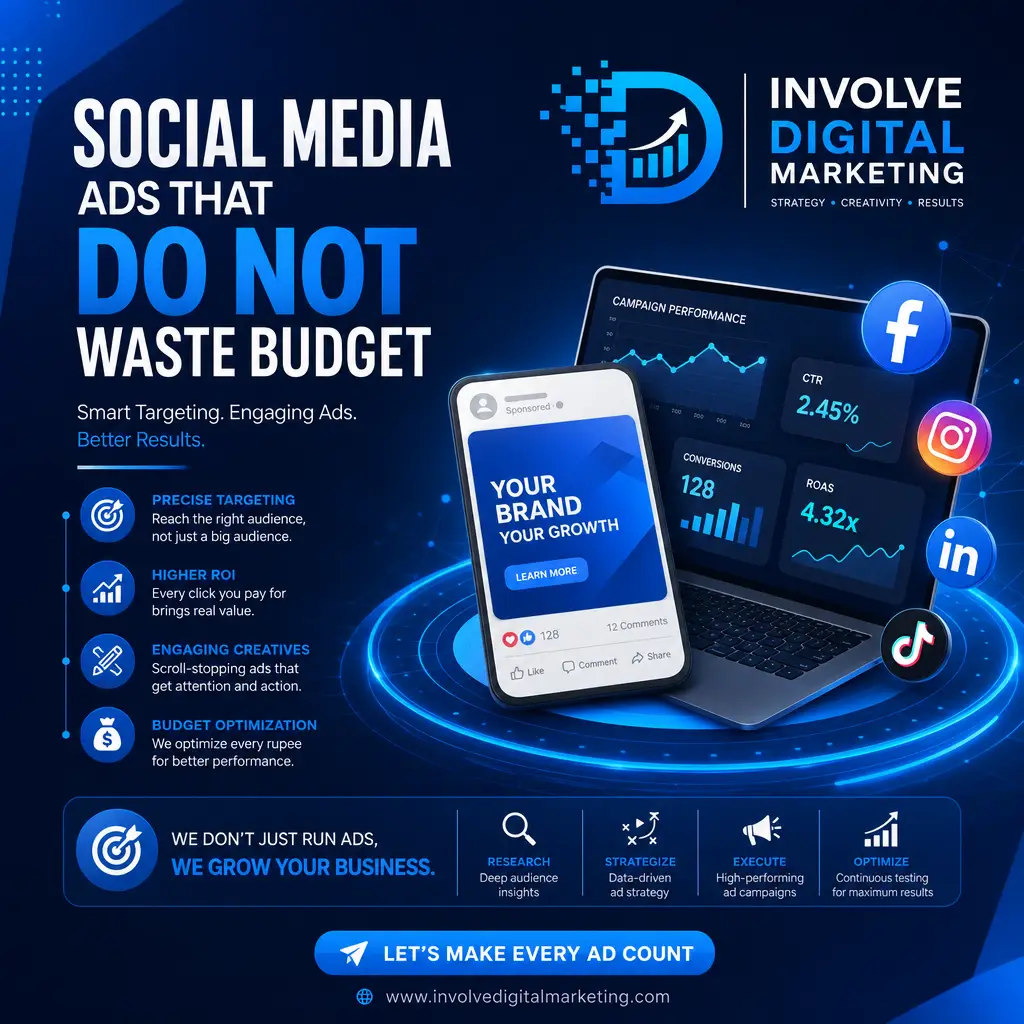
Social can create demand if you respect how people scroll. These social media advertising best practices help keep results real:
- Lead with one clear idea per ad
- Use native formats; UGC-style video often beats polished creative
- Match the landing page headline to the ad promise
- Test angles before you scale spend
- Retarget with proof content: reviews, outcomes, demos
Automation tips:
- Route leads to CRM and send fast follow-up by email or SMS
- Use dynamic creative with strong brand templates
- Pause ads when CPA spikes or frequency gets too high
Google Ads vs Facebook Ads: When to Use Each
The Google Ads vs Facebook Ads debate is less about which is better and more about intent.
Google Ads works best when:
- People are already searching
- You have clear keywords tied to revenue
- Your landing pages and tracking are strong
Facebook/Instagram (Meta) works best when:
- You need demand and new audiences
- Your product sells well with visuals
- You can test creative fast
A balanced plan:
- Use Meta to create and retarget demand
- Use Google Search to catch high-intent traffic
- Use YouTube and Display only when measurement is mature
PPC Campaign Tips for This Week
Use these PPC campaign management tips to cut waste and learn faster:
- Split campaigns by intent: brand, non-brand, competitor, re-marketing
- Use negative keywords to block junk searches
- Match ad groups to tight landing pages
- Track the actions that matter, not just clicks. If you are still setting a budget, our honest 2026 numbers on what digital marketing costs in Jacksonville give you a baseline
- Review search terms and landing pages every week
Automation and AI wins:
- Alerts for spend spikes
- Automated bidding only after tracking is reliable
- AI help for search term clustering and new ad group ideas
Email Segmentation Tactics That Drive Revenue
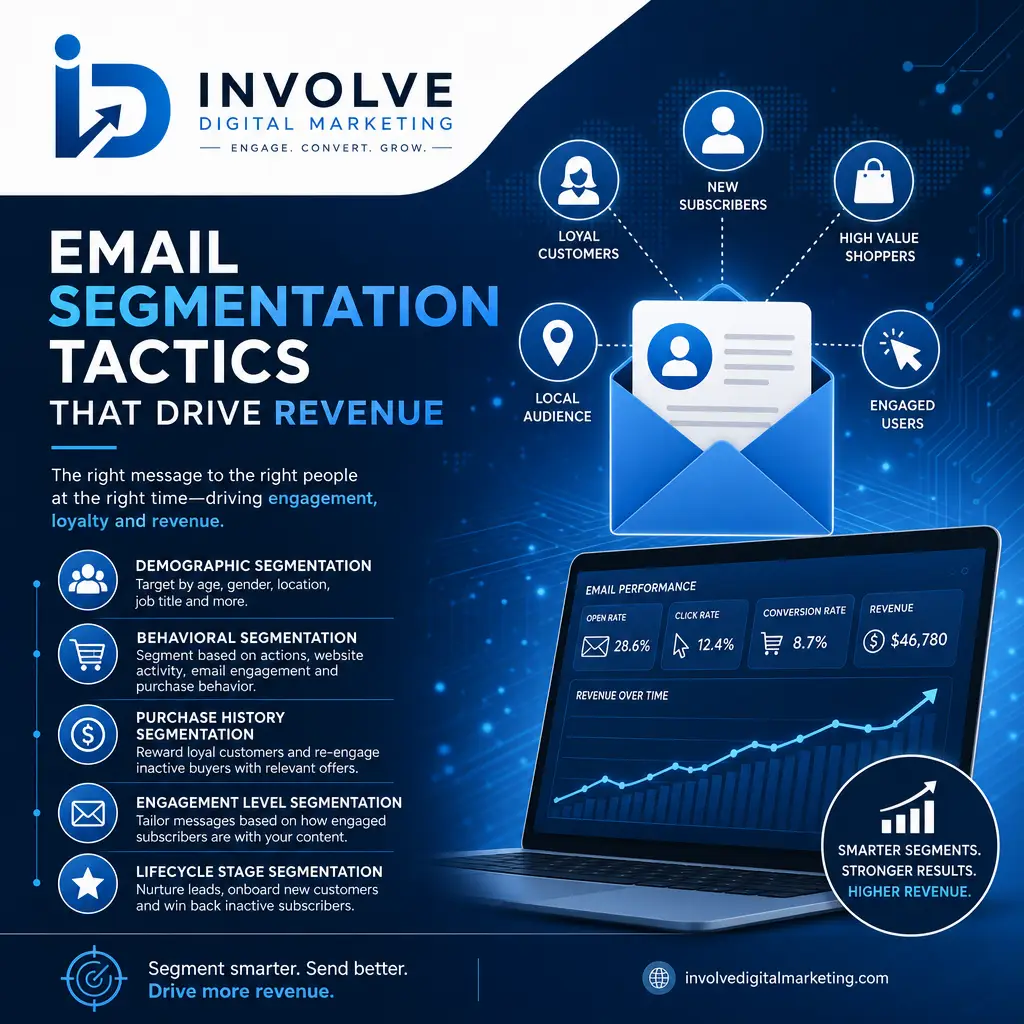
Email still works when it feels useful. Segmentation is the big win. Try these email marketing segmentation tactics:
High-impact segments
- New leads, 0 to 7 days
- Highly engaged users
- Product or category interest
- life-cycle stage, like trial or repeat buyer
- Inactive users, no open or click in 60 to 90 days
Automations worth building
- Welcome and expectation setting
- Abandoned cart or browse
- Lead nurture with proof and objection handling
- Post-purchase onboarding and cross-sell
- Re-engagement and win-back
AI can support:
- Subject line tests
- Send-time optimization
- Predictive segments for buy or churn risk
But keep delivery:
- Do not over-mail
- Keep the list clean and stay inside Gmail’s sender guidelines
- Use double opt-in where it fits
- Put value ahead of volume
Best CRM for Marketing: How to Choose Without Regret
There is no single best CRM for marketing. We keep clients on one all-in-one marketing dashboard so the data stays in one place. There is only the best fit for your team and workflow.
Choose a CRM based on:
- Integration depth: ads, email, website forms, e commerce, and data warehouse
- life-cycle automation: scoring, routing, sequences, and tasks
- Reporting: pipeline influence, source tracking, and cohort results
- Usability: sales adoption matters more than feature lists
A smart short list:
- Start with your must-have automations
- Check native integrations or stable connectors
- Make sure marketing and sales have a clean handoff
AI features to look for:
- Conversation summaries
- Auto logging and enrichment
- Predictive lead scoring, checked against real outcomes
Inbound vs Outbound Marketing: Build a Hybrid Engine
The best growth systems are not loyal to one channel. Knowing inbound marketing vs outbound marketing helps you balance near-term pipeline and long-term brand value.
Inbound:
- SEO, content, webinars, and organic social
- Pros: compounding returns, trust, lower CAC over time
- Cons: slower to ramp
Outbound:
- Cold email, cold calling, outbound LinkedIn, and direct outreach
- Pros: steady volume and faster feedback
- Cons: needs sharp targeting and strong messaging
Hybrid play:
- Use inbound content to support outbound with useful proof
- Use outbound replies to shape new content ideas
- Use retargeting to stay visible during consideration
Small Business Lead Generation Methods That Scale with Automation
Many teams want more leads without more headcount. These small business lead generation methods are reliable:
- Local SEO and Google Business Profile work, following Google’s guidelines for representing your business
- High-intent landing pages for each service
- Referral loops from partners, customers, and affiliates
- Lead magnets like checklists, calculators, and templates
- Paid search for bottom-funnel keywords
- Retargeting for visitors and engaged social users
Automation ideas that punch above their weight:
- Instant lead response with calendar links
- Round-robin routing to reps
- Follow-up tasks if there is no reply in 24 hours
- Simple lead scoring based on fit and intent
Conversion Rate Optimization Checklist
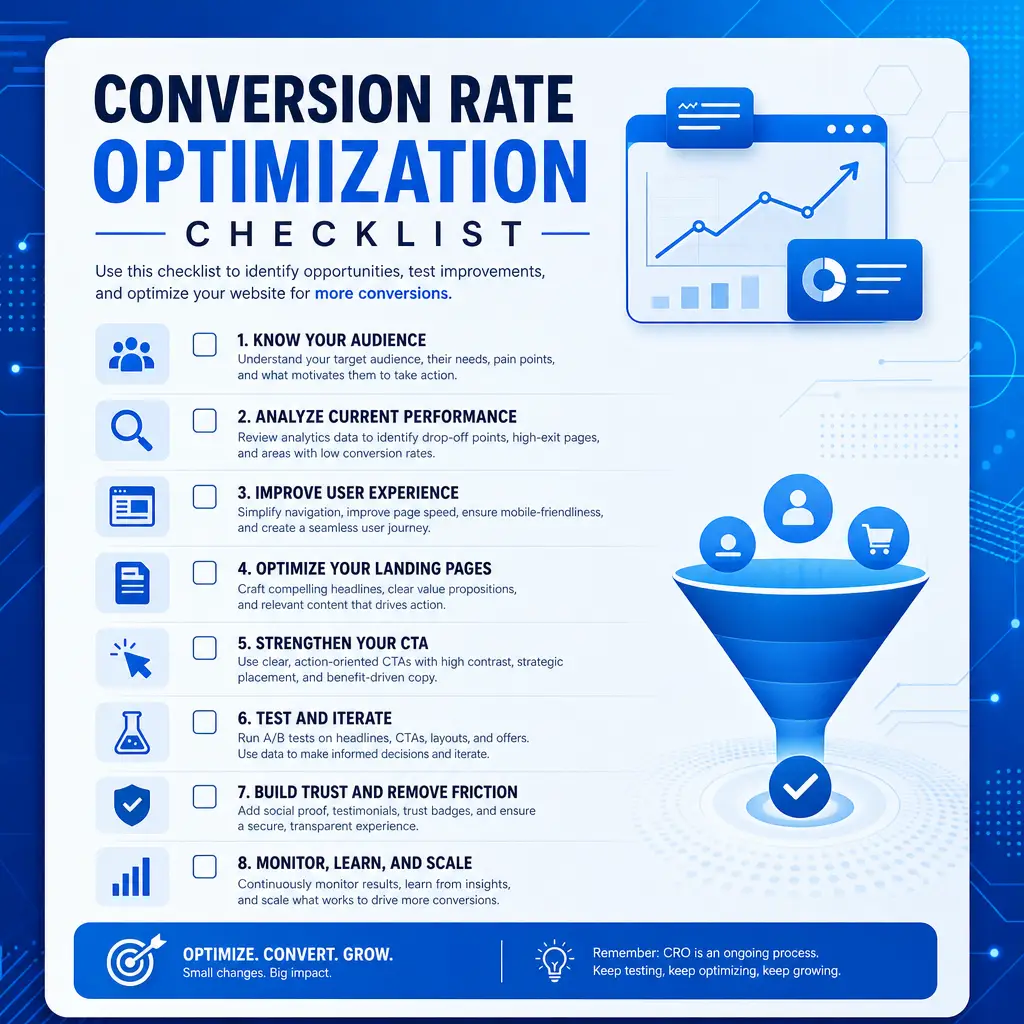
If you want a conversion rate optimization checklist, start with the basics. Many traffic problems are really conversion problems.
Landing page checklist
- Headline matches the ad or search intent
- One main CTA per page
- Fast load time, especially on mobile, measured against Core Web Vitals
- Social proof near the CTA
- Clear risk reversal, like a guarantee or cancel anytime
- Short forms or progressive profiling when possible
Funnel checklist
- Track each step, from view to close
- Remove fields you do not need
- Add small yes steps, like a quiz or two-step form
- Use re-marketing to recover drop-offs
If you want to fix a low website conversion rate, do not redesign everything at once. Our take on conversion-first design covers why mobile-first alone is not enough. Run controlled tests:
- One new headline vs control
- One new hero offer
- One shorter form
- One proof block above the fold
Marketing Analytics and Attribution: Measure What Actually Drove Revenue
Most teams track leads and ROAS and still feel unsure. Strong marketing analytics and attribution shows what to scale.
What to measure weekly
- Cost per qualified lead, not just CPL
- Conversion rates by funnel step
- Pipeline and revenue by channel
- Cohorts for retention and LTV
- Creative results by angle, format, and hook
Attribution reality check
- Last click is simple but can mislead
- Multi-touch is better but harder
- The best setup is consistent, documented, and tested
Practical setup:
- Use UTM parameters every time
- Track key events, like form submit, booked call, purchase, and activation
- Connect CRM revenue back to source and medium
- Run lift tests when possible, like geo tests and holdouts
AI can help by:
- Spotting anomalies
- Summarizing dashboards
- Forecasting from leading signals with human review
Improve Brand Awareness Online So Performance Gets Cheaper Over Time
If you only chase conversions, costs can rise. To improve brand awareness online, build a clear top-of-funnel layer. That now includes showing up in Google’s AI Overviews and in what ChatGPT recommends.
High-leverage awareness plays:
- A steady content series
- Founder-led or expert-led video clips
- Guest podcasts, partnerships, and newsletters
- Social proof campaigns with case study snippets and fresh Google reviews
- Community touchpoints like webinars and office hours
Automation keeps this work going:
- Turn long posts into short drafts
- Schedule and remix posts based on engagement
- Send comments and DMs to a signal inbox for new ideas
Putting It All Together: Your Digital Marketing & AI Automation Blueprint
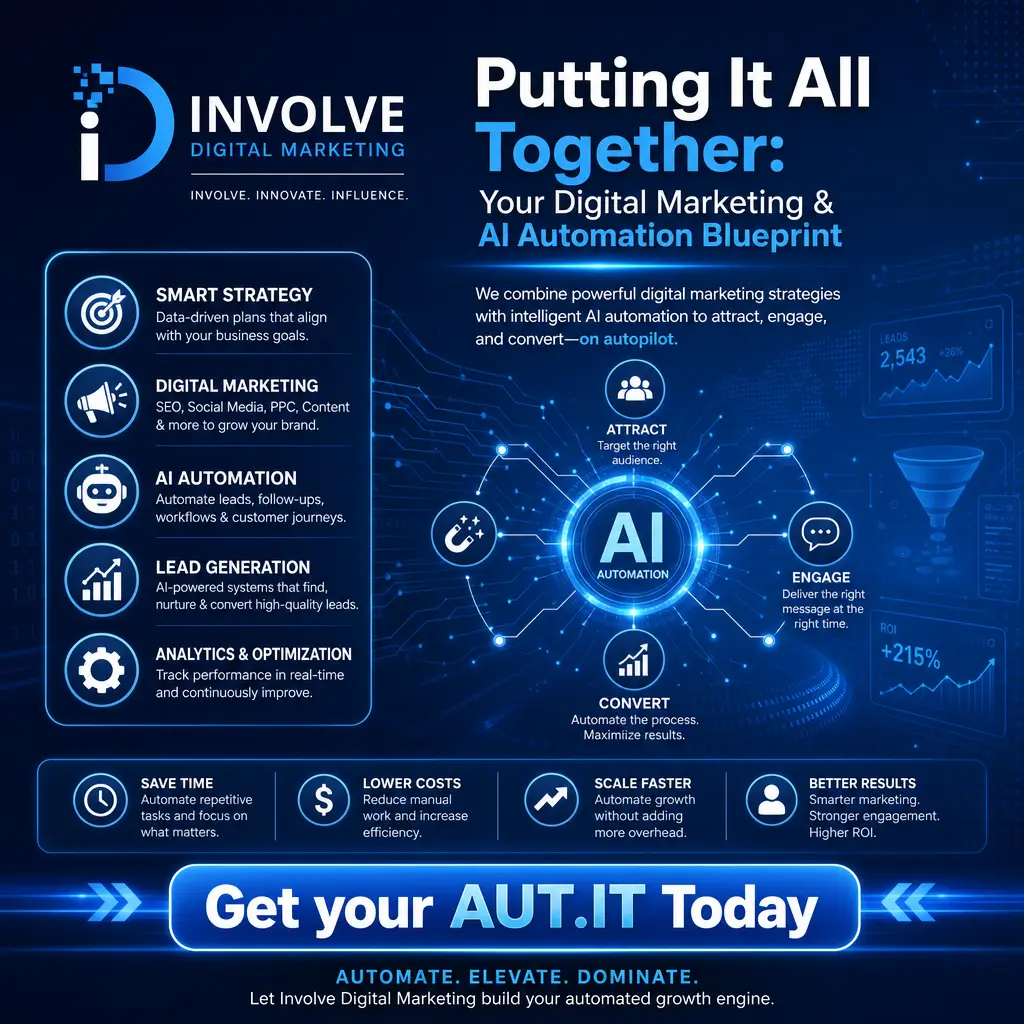
To make this practical, use a simple rollout plan.
Week 1: Foundation and tracking
- Define ICP, top pain points, and top outcomes
- Map funnel stages and conversion events
- Standardize UTMs and CRM fields
- Check site speed and mobile UX
Week 2: Funnel and conversion upgrades
- Build or refresh one high-intent landing page
- Set up conversion tracking you trust
- Launch one basic CRO test, like headline or CTA
Week 3: Automation and life-cycle
- Set up welcome and nurture sequences
- Add lead routing and follow-up tasks
- Create three segments: new, engaged, inactive
Week 4: Channel execution and learning loop
- Launch one Google Search campaign and one paid social test
- Add retargeting with proof creative
- Start a weekly review: what worked, what did not, what to test next
This is the difference between running marketing and building a growth system.
Conclusion: Build Systems, Not One-Off Campaigns
The strongest digital marketing solutions mix solid basics, clear measurement, and AI-powered execution. Use automation to speed response times, personalize journeys, and keep your team focused on strategy. Then keep improving one funnel step, one segment, and one creative angle at a time. If you want a second opinion on which step to fix first, book a free 30-minute AUT.IT audit. That is how digital marketing & AI automation drives growth that lasts.
Frequently Asked Questions
What should I have in place before adding AI and automation to my marketing?
Start with the basics: clear positioning and offer, a mapped funnel and life-cycle, clean tracking and attribution, and steady messaging across your main channels. Without good data, clear conversion events, and a simple journey, automation only speeds up bad results. AI works best on top of solid measurement, a content engine, and a CRM-based single source of truth.
How is marketing automation different from a set-and-forget email blast?
Real marketing automation uses rules, data, and channels to move people through a life-cycle in a useful way. It includes triggered messages, segmentation, routing, lead scoring, and reporting. It is not a replacement for strategy or creative, and it is not a promise of sales. AI can improve timing, variants, and analysis, but it still needs human oversight.
When should I choose Google Ads versus Facebook or Instagram?
Choose based on intent. Use Google Ads to catch high-intent searches when your keywords, landing pages, and tracking are strong. Use Meta to create demand, reach new people, and tell visual stories, then retarget them. The best plan often uses both.
What are the fastest, high-impact steps I can take in 30 days?
Follow the 4-week plan. Week 1, set ICP, map funnel and events, standardize UTMs and CRM, and check speed and mobile UX. Week 2, ship one high-intent landing page, set up trusted tracking, and run one CRO test. Week 3, build welcome and nurture flows, lead routing, and three segments. Week 4, launch one Google Search test and one paid social test, add proof-led retargeting, and start a weekly review.
How does AI help SEO, content, and analytics without hurting brand voice?
Use AI for speed and scale: outlines from search intent, old post refreshes, schema and FAQ drafts, creative variants, anomaly checks, and forecasts. Keep humans in charge of brand view, original insight, real examples, and final copy check. Pair AI with clear attribution, clean UTMs, key event tracking, CRM revenue tie-back, and tests like holdouts to confirm what really drives pipeline and LTV.
How do I know if my team is ready to shift from one-off campaigns to a system?
You are ready when you can document your ICP, map a simple funnel with clear conversion events, and trust your tracking. If you can define channel roles like SEO, paid social, Google Ads, and email, and keep messaging consistent across them, you can start orchestrating journeys. Add automation once you have clean CRM data, basic life-cycle segments, and a weekly review cadence.
What are the most important marketing automations to build first?
Start with high-leverage, behavior-triggered flows: welcome and expectation setting, abandoned cart or browse, lead nurture with proof, post-purchase onboarding and cross-sell, and re-engagement. Pair them with lead routing, basic lead scoring, and follow-up tasks. These cover each funnel stage, create fast responses, and surface the right next action for sales.
How should small teams prioritize channels without spreading too thin?
Use an omnichannel mindset without being everywhere. Anchor on one source of truth, assign each channel a role, and keep one core promise across formats. Use SEO for intent, paid social for demand, Google Ads for capture, email for conversion and retention, and content for trust. Launch one high-intent Search campaign and one paid social test, then add retargeting and scale what your measurement proves.
Where does AI have the biggest practical impact day-to-day?
AI speeds up creative variants from one core message, send-time and subject line testing, search term clustering, anomaly alerts for spend and CPA, drop-off analysis from ad to page to form, and forecasting from leading signals. It also speeds landing page drafts and content refreshes. Its value compounds when tracking is reliable, and workflows are structured.
How can I improve conversion rates without a full redesign?
Run controlled tests against a clear checklist. Make sure the headline matches intent, keep one primary CTA, speed up mobile load, add proof near the CTA, reduce form fields, and use risk reversal. Test one change at a time: new headline, hero offer, shorter form, or moving proof above the fold. Track step-by-step funnel metrics and use remarketing to recover drop-offs.